← News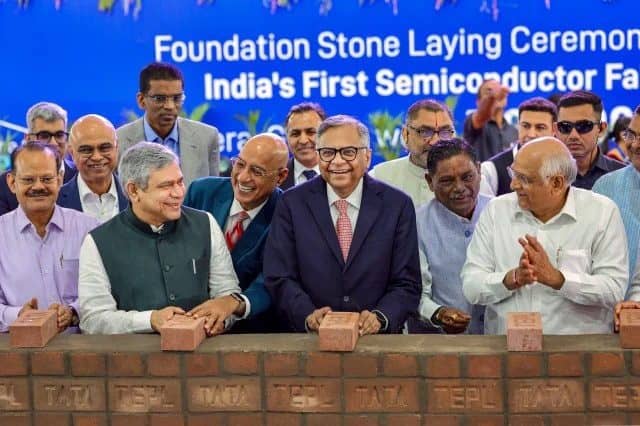
Sarkhej–Dholera Namo Bharat: Govt approves first 'desi' semi high-speed rail corridor. Check route, statio
Freshgeneral · 13 May 2026
Photo — Source: DSIRDA / DICDL (dholera.gujarat.gov.in)
In brief · AI summary
The Indian Union Cabinet has officially approved the first semi high-speed rail corridor named the Sarkhej–Dholera Namo Bharat. This significant development aims to enhance connectivity in the region and facilitate seamless transportation for passengers traveling between Ahmedabad and the Dholera Special Investment Region (SIR). The project, valued at approximately ₹3,936 crore, emphasizes the government’s commitment to improving infrastructure while supporting economic growth in various sectors, particularly in Dholera, which is poised for rapid development in the coming years. The newly approved rail corridor will cover a distance of about 100 kilometers, with a target operational speed of 200 km/h. The project is strategically important, not only for reducing travel time between key economic hubs like Ahmedabad and Dholera but also for supporting the ongoing efforts to position Dholera as a pivotal industrial and technological center. This aligns with several concurrent efforts, including the establishment of India's first gallium nitride (GaN)-based Micro-LED semiconductor unit in Dholera, being developed by Tata Electronics in collaboration with PSMC—an initiative that further underscores Dholera's evolution into a manufacturing powerhouse. The significance of the Sarkhej–Dholera rail corridor extends beyond mere transportation; it marks a critical infrastructure investment that is expected to stimulate economic activity in Dholera. As the region is poised to receive an influx of businesses and residents due to projects such as the Dholera airport and additional industrial ventures outlined for 2026-2035, enhanced connectivity through the new rail line will likely foster foreign investment and promote local job creation. Overall, this development highlights Dholera's strategic importance to India's industrial landscape and indicates a focused effort by the government to propel the region to the forefront of economic progress.
The full article stays with its original publisher. Read the complete report at the source:
Read the full article at source · news.google.comKey facts
- Category
- general
- Published
- 13 May 2026
- Source
- news.google.com
AI-written summary based on the publisher's report and our verified Dholera data — the full article remains with the original publisher. Open the source for the complete story.