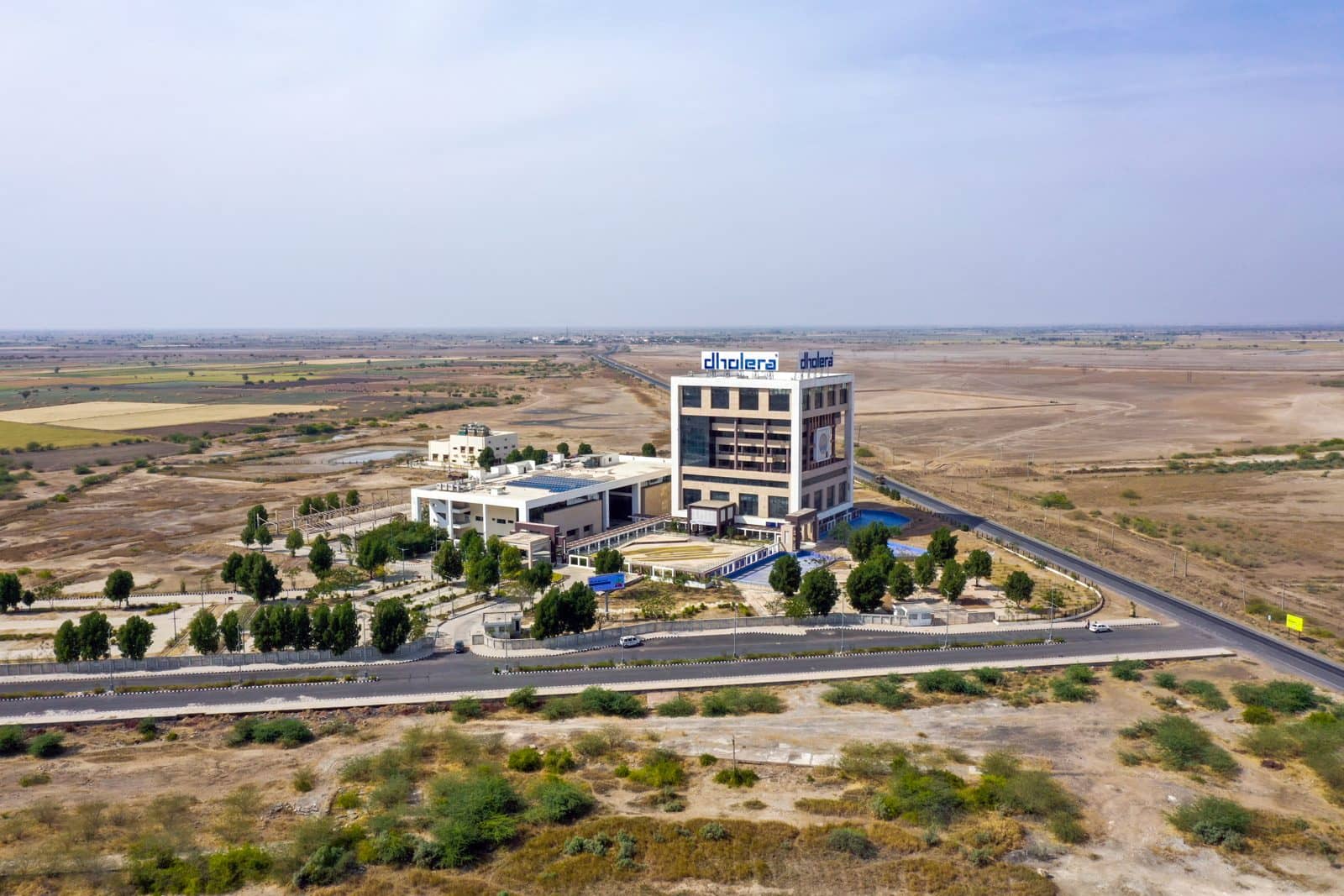
Photo — Source: DSIRDA / DICDL (dholera.gujarat.gov.in)
In brief · AI summary
The Union Cabinet has officially approved the ₹20,667 crore semi-high-speed rail corridor connecting Ahmedabad to Dholera, marking a significant advancement in regional transportation infrastructure. This corridor is designed to accommodate trains operating at speeds of up to 220 kilometers per hour, positioning it as India's first semi-high-speed rail project. The initiative aims to enhance connectivity between the major urban center of Ahmedabad and Dholera, which is rapidly developing into a prominent industrial and smart city hub. The Ahmedabad-Dholera rail corridor, also known as the Bhimnath-Dholera Rail Link, is poised to be a crucial element in the broader plans for Dholera Special Investment Region (Dholera SIR). Dholera is strategically situated about 100 km from Ahmedabad and is set to host a variety of industrial projects and smart city initiatives, making improved transport links essential for facilitating the movement of people and goods. This rail project is expected to significantly reduce travel time between the two cities, enhancing economic prospects and promoting regional growth. The approval of this rail corridor is particularly relevant for Dholera SIR as it underlines the Indian government's commitment to infrastructural investment in the region. The improved connectivity is anticipated to attract domestic and international investments, bolster the local economy, and support job creation. With a clear roadmap towards becoming a global manufacturing hub, the rail corridor is instrumental in making Dholera's vision of a smart city a reality. The infusion of funds and infrastructural development reflects the growing emphasis on sustainable urban planning and economic empowerment in the area.
The full article stays with its original publisher. Read the complete report at the source:
Read the full article at source · news.google.comKey facts
- Category
- general
- Published
- 14 May 2026
- Source
- news.google.com
AI-written summary based on the publisher's report and our verified Dholera data — the full article remains with the original publisher. Open the source for the complete story.